“I Was Absolutely Afraid”: Indigenous Elder on “Mob Mentality” of MAGA Hat-Wearing Students in D.C. | Democracy Now!

'We thought, there at the march, that the best thing to do was to ignore the Black Israelites the best we could and to pray for them or for their actions there on the Mall. We really didn't understand their presence there and harassing us, but we just went ahead on with our rally. Then things started escalating between the Black Israelites and the [white] youth. When it got to about 200 youth, and the screaming and the hollerings … I was absolutely afraid. There was a group of over 200 young angry white men who were displaying mob mentality. And they were facing down just four black individuals. And it was coming to a point where just a snap of the finger could have caused them kids to descend on those four individuals. … I wasn't focusing on anybody except taking the youth out of there, the indigenous youth that was with me, out of that situation. And that's when Mr. Sandmann stood in front of me and blocked my—blocked my path'

Rashida Tlaib: The Senate's Anti-BDS Bill Is an Unconstitutional Attack on Free Speech | Democracy Now

'We speak with Congressmember Rashida Tlaib, who has come out out against the bill, tweeting, “They forgot what country they represent. This is the U.S. where boycotting is a right & part of our historical fight for freedom & equality. Maybe a refresher on our U.S. Constitution is in order, then get back to opening up our government instead of taking our rights away.”'

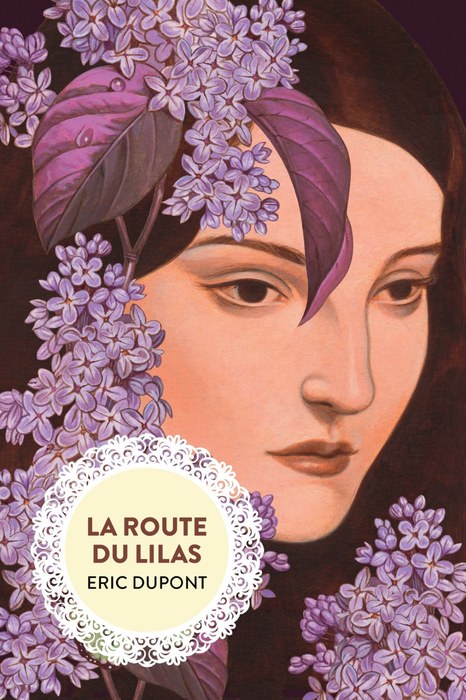
Critique de livre: La route du lilas d'Éric Dupont

Critique de livre: La route du lilas d'Éric Dupont

Le tout dernier livre d'Éric Dupont, publié l'automne dernier, a la qualité d'être prometteur. Deux femmes, une québécoise et une brésilienne, se rencontrent à Paris juste avant les évènements de mai 1968. Elles se lient d'amour, découvrent ensemble la ville, la littérature, et certaines douleurs de la vie. Dans ce roman épique qui tangue de la France au Brésil, et de Nashville à la Gaspésie, ce roman est un hommage aux personnages féminins grandioses, et à la fleur peu commune du lilas.

Year-ends and bookends

Year-ends and bookends

This year, my world was moved by current events and personal challenges. Books helped me steady my way, and so I continued reading. I have read new books, old books, classics in French and English. I have read fiction and non-fiction, in paper and electronic form. I was not particular about what I would read, so long as I kept reading. Here is a round-up of some of my favourites.

Richard Wolff: We Need a More Humane Economic System—Not One That Only Benefits the Rich

'[Political leaders have] ratcheted down the quality of jobs. We've made people use up their savings since the great crash of 2008, so they're in a bind. They have really no choice but to offer themselves at lower wages or at less benefit or at less security than before, which is why there's the anger, which is why there was the vote for Mr. Trump in the first place, because this talk of recovery really is about that stock market with the funny money that the Fed Reserve pumped in, but is not about the real lives of people, which are in serious trouble, hence the numbers, like a average American family can't get a $400 emergency [loan] because it doesn't have that kind of money in the background. So, you've undone the underlying economy, you have this frothy stock market for the 1 percent, and this is an impossible tension tearing the country apart.'

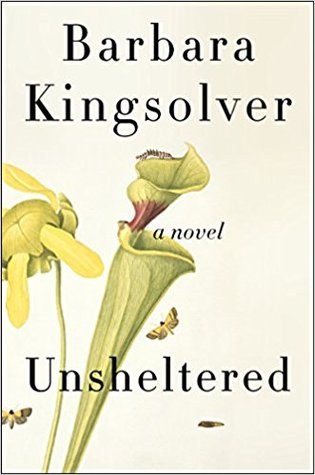
Book review: Unsheltered by Barbara Kingsolver

Book review: Unsheltered by Barbara Kingsolver

Barbara Kingsolver published her latest novel in October of this year. Unsheltered was much awaited given that Kingsolver has a number of acclaimed novels under her belt, including The Lacuna and The Poinsonwood Bible. Unsheltered tells two parallel tales of families living in the same old house, in Vineland, New Jersey, about 100 years apart. The novel takes on fascinating historical elements, but overall falls below this reader's expectations.

Critique de livre: Adolphe de Benjamin Constant

Critique de livre: Adolphe de Benjamin Constant

Dans ce court roman rédigé à la hâte par Benjamin Constant, le lecteur découvre le personnage d'Adolphe, meurtrit et déchiré par le fardeau moral que lui impose sa relation amoureuse. Constant était un homme politique et littéraire du XIXe siècle, et la profondeur d'analyse sentimentale exposée dans ce roman en fait un classique incontournable.