
The Liberals' new anti-worker bill
The Liberals say the Bill C-39 is a golden opportunity to both increase investments and solidify workers' rights. How? They claim to have found a magical process that reduces strike risk while protecting the collective interests' of workers. Sound ridiculous? That's because it is.
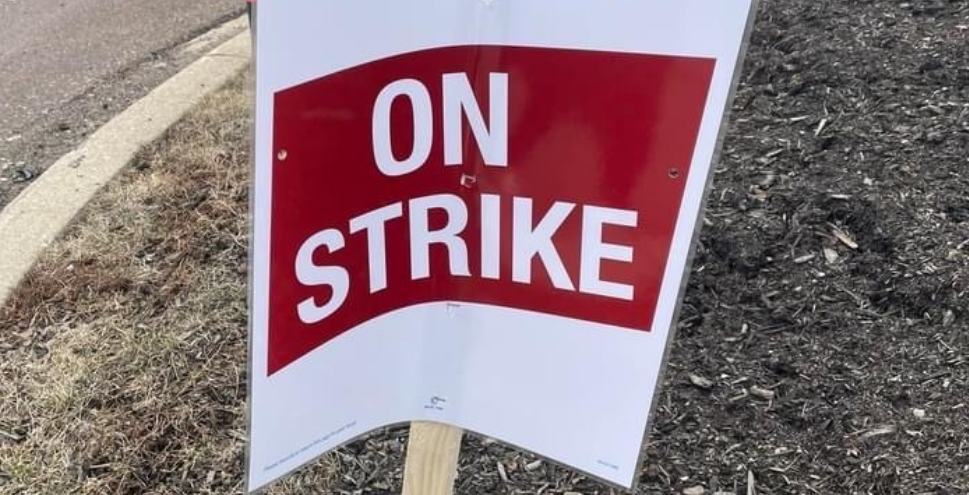
An attack on the right to strike (and other things)
Liberals are not really known to side with workers, but when their party is run by a bunch of bankers and liberal staffers-come-MPs they tend to be that much worse.
The huge omnibus bill that packs in privatization of Canada's public ports, privacy-busting security programs that puts worker surveillance as the tip of the spear, and the elimination of environmental protections also includes a major attack on worker rights.
This should not be surprising or confusing for people. The goal here for the Liberals is to support investment through bringing forward every profit subsidy capital has ever asked for.
Let's take a look at the mess of changes being brought to the Canada Labour Code first.
The Canada Labour Code regulates workplace democracy in the federal sectors. The federal sector employs a fraction of the entire Canadian workforce, but as with most things in Canada, if the federal government does it everyone else copies it. So, expect the following changes to show up in a labour law near you.
A list of what is in the Code changes, with some details below.
- De facto elimination of the right to strike.
- New "special" mediation using a "special" mediator who has "special" (magical, even) report-writing powers that can lead to loss of your right to strike.
- New powers for Labour Minister to intervene in a variety of ways in local bargaining including ending strikes as they begin if the special report says so. Remember that the Liberals did not even assign anyone as "Labour Minister" so it is the business/family minister who is determining your right to strike.
- Extended conciliation for naughty unions who had the gall to have a dispute with their employer last round of bargaining.
- Lengthened timelines for conciliation.
- Lengthened timelines for negotiating "maintenance of activities" agreements for essential parts of the work if you had a dispute.
- Post-Bargaining Mediation for the workers who dared to have a conflict with their employer.
- Individualized fines for those labour leaders who happen to be the head of unions or locals whose members directly challenge these anti-strike provisions.
- The loss of sick leave benefits for union members if you happened to have negotiated any sick leave.
That's a lot. But, there's more.
Somethings not-so-bad?
There are three provisions that seem less terrible in contrast:
- Protections against contract flipping
- First contract arbitration
- Better support for non-union workers who do not get paid on time.
"Oh, something good," you exclaim. Can we focus on that?
Sure. But, only to tell you how bad they are.
Contract flipping protections
The protections against "contract flipping" has long been a demand of the labour movement. Contracting-out and privatization has meant the loss of a your union and your collective agreement when a employer's name changes on an outsourcing contract.
That is, when your employer's multi-year contract ends and if it does not win a contract extension, you as a worker loose your collective agreement. Because collective agreements are tied to employers.
Workers then have to organize the "new" firm that got the "new" contract.
It is usually the case, however, that the vast majority of workers continue with the "new" firm when contract is changed (or "flipped"). So, all that has happened is the nameplate of the company changes and workers are back to square one on wages and benefits.
Successor rights for union collective agreements so they automatically apply to the "new" firm is a win.
BUT, it only applies to airports.
This change is necessary given the massive privatization of airports coming. Those privatizations will lead to much more outsourcing, contracting-out, and the full weight of predatory private capital coming for these workers.
So, without some contract flipping protection the union density at airports would evaporate quickly. And, something no one tells anyone is that security at airports is significantly boosted by union density.
As it is, union density will still decline because outsourcing through privatization is not necessarily contract flipping.
First Contract Arbitration
First contract arbitration is when, after some length of time after organizing your workplace, if you have not been able to get your employer to sign a new agreement, you get access to a mandated arbitration system that guarantees you get a contract.
Sounds great! This was another long-held demand of private sector unions, especially those in the very large federally regulated industries.
The reason why is because the normal process has become this:
Unions spend hundreds of thousands of dollars and navigating a gauntlet of anti-worker regulation organizing a workplace (hurrah!). Then, they get to the table and the employer just does not want to negotiate.
The employer does not just say this, of course. That's not allowed. Instead, the employer slow-rolls bargaining, launches an anti-union campaign, and mobilizes opposition to the union based on that same slow progress of bargaining they are causing.
Two years go by and there is massive turnover in the workplace, usually (and of course just coincidentally) with many key union organizers being dismissed. And, still no contract.
You started the negotiations at the height of member mobilization and brand new workplace democracy. Two years in and it has been replaced with a technocratic bargaining process that results in nothing. There is no ability to strike because support in the workplace has dwindled in the face of a fully funded anti-union campaign.
If you do get an agreement, it probably will not be ratified, but you will also get no strike mandate.
Or, you ratify the CA under duress and it is garbage. And/or, you simply face a de-certification campaign and the workers lose the workplace democracy that they never really achieved.
So, arbitration for first contracts is a necessary demand for labour to allow workers to fully express their Constitutional right to organized workplace democracy. At least you get your foot in the door for rights.
This is good.
But, of course the Liberals could not leave it just at that. They had to add that the employer can also call for first contract arbitration.
This basically eliminates the right to strike for your first contract. If workers get too organized and the anti-union campaign is not working, the employer just pulls the escape hatch and hopes for a bad arbitration decision on a first contract.
Now, this perfect organized scenario barely ever happens, but Liberals just cannot help but take away this right to strike whenever it appears.
Finally, the support for non-union workers getting paid. Long-overdue and kind of ridiculous that the Labour Program is so ineffective at simply getting workers paid that they had to change the law to do that. They could have just resourced the program already. So, we are not holding our breath that more resources are going to make this change effective.
That's the good stuff. What about the bad stuff?
The very not-so-great stuff
First, there is no right to bargain a collective agreement without the right to strike. It is a fundamental part of any negotiation (be it union or for any contract) to be able to say "no" and walk away from a bad deal.
There has been a lot of discussion about "Section 107" and its abuse by the Liberals to end strikes through dictatorship-level Ministerial pronouncements. There are even lawsuits against the government's use of it.
Well, that abuse of 107 will now been codified in law.
Some details below, but basically the bargaining process will be an arduous 111 days, navigating a maze of notices to the government, mediation, conciliation, special mediation, "cooling-off periods", additional notice to strike, a special mediator written report outlining exactly how bad everyone is for thinking about a labour dispute, and finally the ending of your one hour long strike by the minister who will send you to binding interest arbitration where a government-appointed arbitrator will determine your contract.
Sure, there are some other options and confusing language around it. It does not have to go down this way. The government does not have to intervene in such a broad and specific way.
The government is saying it will only apply this route to naughty unions who had a dispute last time.
But, there is absolutely nothing in the bill as it is written that limits the powers of the government to push every single round of bargaining with every single employer into this rights limited process.
And, no one is confused that this or the next government will be tempted into doing just that. Especially if we have another round of high inflation where employers don't want to give inflation-adjusted wage increases. This happens to be why we had the higher than "normal" strike activity post-pandemic, which is the entire reason the government is saying it needs these new superpowers.
So, sure. Just try to convince me they are not going to take full advantage of their new superpowers.
The government says it has restored the right to strike from the abuse of Section 107. But, an hour of strike before it is ended by government minister diktat is not the right to strike.
The right to bargain and the associated right to strike is not a right at all if workers have to ask permission from a government Minister.
Amendments to Section 107 superpowers of the Labour Minister
Section 107 superpowers for the Minister of Labour have been extended.
If the Minister gets a report from the special mediator that allows a Ministers to have the opinion that the national interest is at risk of being impacted economically or will result in "serious social disruption" (read: if there is going to be a strike of angry union members) then the minister can end the strike and send the parties to interest arbitration.
The supposed limit on the Minister's power is that they have to receive a report from the special mediator to end a strike. The government says special mediators are only supposed to be assigned if there was a dispute last round of bargaining, the so-called "5%" who could not get a deal at the table. However, there is no provision guaranteeing this.
Everyone who reads this comes to the same conclusion: all bargaining will eventually end up with this special mediator being appointed just in case the Minister wants to end the strike.
The minister cannot stop the strike before it happens. However, the time required to draft the notice to the end the strike will be 15 days after they get the special mediator report.
15 days to write a directive.
ESDC will have a minimum of 36 days to produce their impact assessment report knowing full well the minster wants to have the power to end any strike.
There is no period of bureaucracy paper shuffling.
The minister could end the strike the minute it started.
Violation of International Law
The International Court of Justice has very recently reasserted that the right to strike is covered by international law and Treaties that the Canadian government signed.
The current language of the Bill violates this law as outlined under the International Labour Organization of the UN (ILO).
The new expanded Section 107 that the Minister can use to end a strike have been expanded to include considerations of "national interest" around economic disruption and "serious social disruption".
The ILO Committee on Freedom of Association (CFA) has long-recognized that "strikes are by nature disruptive and costly" (paragraph 755) but must be allowed.
Back-to-work orders and the imposition of compulsory arbitration are both strictly regulated by the ILO by two key concepts
I am told the two concepts are:
- "essential services" in the strict sense of the term are services where the interruption of which would endanger the life, personal safety or health of whole or part of the population". The CFA has also drawn a list of services that are not essential (including ports) and therefore cannot be applied restrictions such as the ones proposed for Section 107 (paragraph 842).
- an "acute national crisis" is a crisis that is "endangering the normal living conditions of the population". A higher bar than it even sounds and much higher than the proposed changes.
Economic disruption is too broad (since that is what a strike is).
"Serious social disruption" is not even contemplated under ILO standards. This is way too broad, bizarre even, since no one knows what the definition of social disruption is.
The bill expands the powers of the minister beyond the ILO/international law.
Length of bargaining
It will now be at least 111 days of bargaining, mediation, conciliation, and special mediation, "cooling-off", and notice period before you can get to a strike or lockout situation. Minimum.
If you were "bad" last round and had a dispute, this will start almost a year earlier.
Special Mediator
A Special Mediator can be (will be!) appointed by the Minister for 21 days at the end of bargaining (while in conciliation) if you have not got a deal.
The Special Mediator will write a report if you are unable to get a deal or if your members are crazy enough to reject a tentative (forced vote or not).
That report will be sent to the Minister outlining all the bad things going on at the table and recommending that the Minister take action to stop a strike.
Sure, it could say something like "let them go on strike" or "workers have nothing to lose but their chains" but who are they kidding? It isn't going to say that, it is going to say "they are too far apart, send them to arbitration."
This report will then be released to the public by the Minister after five days to publicly shame the parties for not getting a deal at the table.
Violation of the Code
There is a special fine for labour leaders who might be the elected representative of a group of workers who continue the strike after the Minister orders the end to the strike.
Illegal strikes/lockouts:
- $1,000/day for employers and unions
- $10,000 for individual officers/representatives
- general offence penalties up to $10,000 for contravening CIRB orders.