
Striking the University
Universities are not widget factories. They are more like municipalities. Strike actions should match that reality.

Graham Cox is a labour union researcher at Unifor focusing on economic, bargaining, and policy in the energy, road, rail, and marine sectors.
Previous to Unifor, Graham was a researcher at the Canadian Union of Public Employees (CUPE). At CUPE his work focused on economic and policy analysis for the anti-privatization, trade, post-secondary education, utilities, employment insurance, special projects, and organizing files.
Before working at CUPE, Graham served the student movement as National Researcher of the Canadian Federation of Students and chairperson of the National Graduate Caucus.
Graham has worked as a union organizer for the PSAC, CUPE, and the CFS with a focus on graduate student teaching assistant, research assistant and contingent academic staff union drives. This included leading drives to organize academic workers at the University of New Brunswick, UPEI, and Memorial University of Newfoundland.
Please also see articles under the author Editors (What’s left).
Universities are not widget factories. They are more like municipalities. Strike actions should match that reality.

As price inflation stays above the previous 30 year average, concerns about general price increases continue to shift from one consumer good to another. Right now, people are focused on food prices as food is so obviously getting more expensive month to month.
Canada, after 40 years of neoliberal policies privatizing most of our Crown corporations, we now think about services instead of production when it comes to public ownership. There are still many publicly owned production facilities in Canada and around the word. Energy, media, telecommunications, water/waste-water, and transport sectors have moved in and out of public ownership.

Instead of insecure passwords, password managers with passwords to access them, two-factor authentication through text message or app on your phone, and easily compromised services, we can now start using a simple, user-friendly physical USB key system.

With high inflation continuing, mainstream right-wing economists and pundits seem very concerned with a mythical beast called the 'wage-price spiral'. These spirals are not real and are simply an attack on working people with the poorest bearing most of the brunt of the policies of wage control. Here we look at why this is and the correct response to it.

While anti-women, racist, xenophobic, and homophobic narratives have become standard for the far-right for most of recent memory, anti-trans has been pushed to the front pages in recent elections. A current top election campaign point is the attempt to ban trans women from 'single sex' female sports.

The Liberals are hoping that if they throw enough money at the private sector, an army of Elon Musks will emerge from the darkness armed with even more private capital to save humanity and the Canadian economy along with it.

Students, who make up the future citizens, workers, and innovators of Canada, are barely mentioned in this budget except to partially extend pandemic-related economic support. Without further support for broad-based training and curiosity driven research, the innovation program will grind to a halt long before we solve the country's problems.
The solution to most of our problems in Canada for expanding production using our resources is connecting firms across Canada. This means facilitating transport from where the resources are, but few workers are (because of the climate and distance from other things), to where production workers are, and then onto where the rest of the production can be finalized or exported. Deregulation does not do this, but an industrial strategy will.
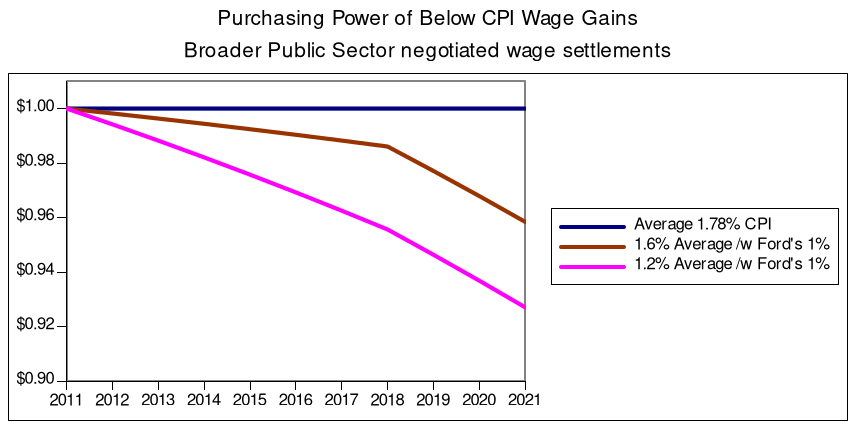
There are many contradictory definitions, explanations, and policy responses to high inflation. Understanding the differences is important to develop the correct orientation to these pressures on workers' wage demands and the left's policy responses.